
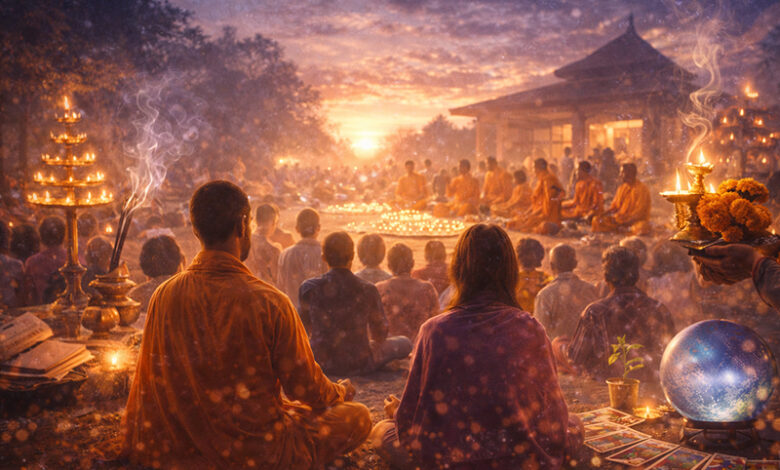
Sacred Rituals and Meditation Gatherings Witness Rise as People Seek Inner Balance
December 21: Across cities and towns, a noticeable rise in sacred rituals, meditation gatherings, and spiritual practices is being observed as people increasingly seek inner balance and emotional stability. Community centres, temples, meditation halls, and open spaces have seen growing participation, reflecting a broader shift toward spiritual engagement amid fast-paced modern lifestyles.
Spiritual leaders and organisers note that individuals from diverse age groups and professional backgrounds are turning to structured spiritual practices to cope with mental fatigue, stress, and emotional uncertainty. The trend highlights a renewed interest in traditions that emphasize mindfulness, reflection, and collective harmony.
Growing Participation in Spiritual Activities
Morning and evening meditation sessions, prayer meetings, and group chanting have witnessed increased attendance in recent weeks. Organisers report that many first-time participants are joining alongside long-time practitioners, indicating widening acceptance of spiritual routines as part of daily life.
Urban wellness centres have expanded schedules to accommodate demand, while rural communities continue to rely on traditional gatherings held at temples and community halls. In several regions, spiritual activities are being integrated into workplace wellness programs and educational institutions.
Participants say these practices offer a sense of calm, grounding, and perspective that helps them navigate personal and professional challenges.
Role of Meditation and Mindfulness
Meditation has emerged as a central component of the growing spiritual movement. Guided sessions focusing on breath control, silence, and awareness are drawing participants seeking mental clarity and emotional regulation.
Spiritual instructors explain that meditation helps individuals reconnect with their inner selves, reducing anxiety and promoting resilience. Many practitioners describe feeling more focused, patient, and emotionally balanced after regular practice.
Mindfulness techniques, often rooted in ancient traditions, are also being adapted for contemporary settings, making them accessible to people with busy schedules.
Revival of Sacred Rituals
Alongside meditation, sacred rituals have regained prominence. Rituals involving lamps, incense, prayers, and symbolic offerings are being observed not only for religious reasons but also as expressions of gratitude and intention-setting.
Community elders emphasize that such rituals serve as reminders of shared values and cultural continuity. For many participants, these practices create a sense of belonging and connection that extends beyond individual belief systems.
Spiritual leaders note that rituals provide structure and meaning, offering moments of pause in an otherwise hurried routine.
Community and Collective Healing
Group spiritual gatherings are increasingly being viewed as spaces for collective healing. Organisers say people are drawn to the sense of unity and shared purpose that emerges during group practices.
In times of social and economic uncertainty, these gatherings offer emotional support and reassurance. Participants often share experiences, reinforcing empathy and mutual understanding.
Community leaders believe such collective engagement strengthens social bonds and fosters a sense of responsibility toward one another.
Influence of Modern Lifestyles
Experts observe that modern lifestyles, marked by constant connectivity and information overload, have contributed to spiritual fatigue. In response, individuals are seeking practices that promote simplicity and presence.
Spiritual practitioners suggest that rituals and meditation offer an antidote to distraction by encouraging intentional living. Digital detox initiatives linked to spiritual programs have also gained popularity.
Despite technological advancements, the enduring appeal of spiritual practices suggests a desire to reconnect with timeless principles.
Intergenerational Engagement
An interesting aspect of the current trend is intergenerational participation. Young adults are increasingly attending sessions with parents or elders, bridging generational gaps through shared spiritual experiences.
Educators and spiritual mentors say this interaction fosters mutual respect and understanding. Younger participants often bring fresh perspectives, while elders provide guidance rooted in tradition.
Such engagement is seen as essential for preserving cultural heritage while adapting it to contemporary contexts.
Inclusive and Non-Denominational Approach
Many spiritual gatherings today emphasize inclusivity, welcoming individuals regardless of religious affiliation. Organisers focus on universal values such as compassion, self-awareness, and gratitude.
This non-denominational approach has broadened appeal, attracting participants who may not identify with specific religious institutions but still seek spiritual connection.
Spiritual leaders stress that the goal is inner harmony rather than adherence to rigid doctrines.
Psychological and Emotional Benefits
Mental health professionals acknowledge the positive psychological impact of spiritual practices when approached mindfully. Regular participation in meditation and ritual activities has been linked to improved emotional regulation and reduced stress.
Experts caution, however, that spiritual practices should complement, not replace, professional mental health support when needed.
The integration of spirituality and well-being reflects a holistic approach to personal health.
Looking Ahead
As interest continues to grow, organisers anticipate further expansion of spiritual programs, including retreats, workshops, and community initiatives. Digital platforms are also being used to connect practitioners across regions, though in-person gatherings remain central.
Spiritual leaders emphasize the importance of authenticity and consistency, encouraging individuals to adopt practices that align with their values and lifestyles.
Conclusion
The rising participation in sacred rituals and meditation gatherings signals a collective search for balance and meaning in an increasingly complex world. By turning inward and connecting with community, individuals are finding ways to cultivate peace, resilience, and purpose.
As these practices gain momentum, they reaffirm the enduring role of spirituality as a source of strength, reflection, and unity across societies.
