
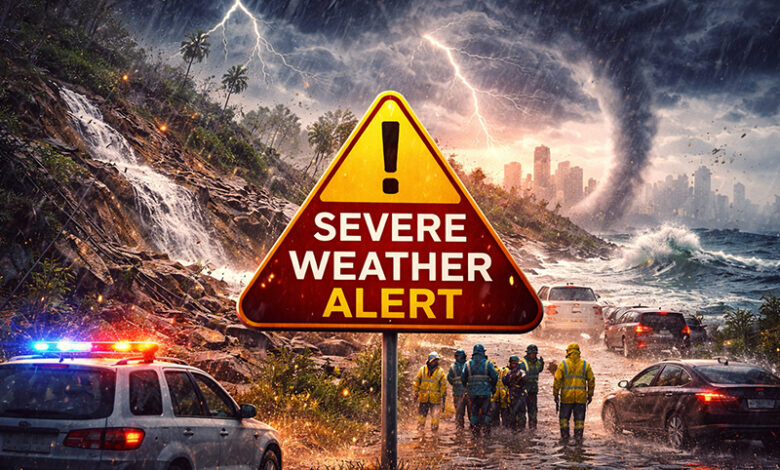
Severe Weather Alert Issued Across Multiple Regions as Authorities Urge Public Caution
New Delhi, Today:
Authorities have issued a severe weather alert for several regions, warning of potentially hazardous conditions over the coming days. The alert follows meteorological assessments indicating the likelihood of intense rainfall, strong winds, and sudden temperature fluctuations, raising concerns over public safety, infrastructure disruption, and agricultural impact.
Disaster management agencies and local administrations have been placed on high alert, with officials urging residents to remain cautious and follow advisories closely. Emergency response teams have been mobilised in vulnerable areas as a precautionary measure.
Forecast Signals Intensifying Conditions
Meteorological officials have indicated that a combination of atmospheric disturbances is expected to affect large parts of the country. Weather systems moving across regions are likely to trigger heavy rainfall in some areas, while others may experience thunderstorms, gusty winds, or localized flooding.
Forecasters warn that weather conditions may change rapidly, increasing the risk of sudden disruptions. Coastal and low-lying regions are considered particularly vulnerable, while hilly areas may face risks such as landslides and road blockages.
Officials have emphasized that the severity of impact will vary by location, but preparedness remains essential across all affected zones.
Administrative Response and Preparedness
State and district administrations have activated emergency protocols in response to the alert. Disaster response teams have been instructed to remain on standby, and coordination between weather departments, local authorities, and emergency services has been intensified.
Municipal bodies have been directed to inspect drainage systems, remove potential obstructions, and ensure readiness of shelters and relief facilities. In regions prone to flooding, authorities have reviewed evacuation plans and emergency communication networks.
Power and water supply departments have also been advised to prepare for possible disruptions, with rapid-response teams assigned to restore essential services if needed.
Impact on Transport and Infrastructure
The weather alert has raised concerns about transportation and infrastructure. Heavy rainfall and strong winds may disrupt road, rail, and air travel, particularly in areas where visibility and surface conditions deteriorate.
Transport authorities have advised commuters to expect delays and plan journeys carefully. Airlines and rail operators are monitoring conditions closely, while highway agencies have issued advisories urging drivers to avoid unnecessary travel during peak weather activity.
Infrastructure experts note that prolonged adverse weather can strain urban systems, especially in densely populated areas with aging drainage networks.
Agricultural and Rural Concerns
Farmers across affected regions have been advised to take precautionary measures to protect crops and livestock. Sudden weather changes can damage standing crops, delay harvesting, and affect soil conditions.
Agriculture departments have issued guidelines encouraging farmers to secure equipment, reinforce storage facilities, and monitor advisories related to crop protection. In some areas, authorities are assessing the potential need for relief measures should damage occur.
Rural communities, particularly those dependent on seasonal farming, are being closely monitored to ensure timely support if required.
Public Safety Advisories Issued
Authorities have issued a series of safety advisories for the public. Residents have been urged to avoid waterlogged areas, stay away from unstable structures, and limit outdoor activities during severe conditions.
Parents have been advised to ensure children remain indoors during storms, while elderly individuals and those with medical conditions are encouraged to take extra precautions.
Emergency helpline numbers have been reinforced, and citizens have been urged to report hazards such as fallen trees, damaged power lines, or flooding to local authorities promptly.
Role of Technology and Monitoring
Advances in weather monitoring and forecasting have enabled authorities to issue early warnings and coordinate responses more effectively. Real-time data, satellite imagery, and predictive models are being used to track developments and update advisories.
Officials say continuous monitoring will allow for timely adjustments to response strategies as conditions evolve. Mobile alerts and digital platforms are being used to disseminate information quickly to the public.
Experts emphasize that public cooperation is critical to ensuring that early warnings translate into effective risk reduction.
Economic and Social Implications
Severe weather events often have broader economic and social impacts, affecting daily life, productivity, and livelihoods. Short-term disruptions to businesses, schools, and public services are possible if conditions worsen.
Authorities have indicated that decisions regarding school closures, remote work advisories, or restrictions on public gatherings will be made based on evolving conditions.
Economists note that while weather-related disruptions are often temporary, repeated events highlight the need for resilient infrastructure and climate-adaptive planning.
Climate Context and Long-Term Concerns
Experts point out that the increasing frequency and intensity of extreme weather events reflect broader climatic trends. While individual events cannot be attributed to a single factor, changing weather patterns are prompting governments to reassess preparedness and mitigation strategies.
Long-term measures such as improved urban planning, strengthened infrastructure, and community awareness programs are increasingly viewed as essential to reduce vulnerability.
Looking Ahead
Weather officials have stated that conditions will be closely monitored over the coming days, with updated advisories issued as necessary. Authorities have urged the public to rely on official information and avoid spreading unverified reports.
Residents in affected regions are encouraged to remain alert, follow safety guidelines, and cooperate with local authorities.
Conclusion
The issuance of a severe weather alert across multiple regions underscores the importance of preparedness and timely response. While the full impact remains uncertain, proactive measures by authorities and public cooperation can significantly reduce risks.
As weather conditions evolve, vigilance, clear communication, and coordinated action will be key to ensuring safety and minimizing disruption in the days ahead.
