
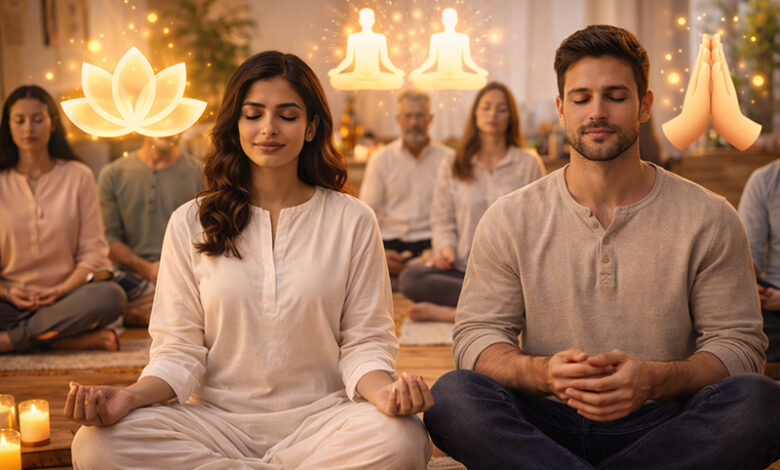
Meditation and Spiritual Gatherings See Surge as People Seek Inner Calm and Purpose
December 21:
Meditation sessions, prayer meetings, and spiritual gatherings are witnessing a noticeable surge across cities and towns, as people increasingly turn inward in search of calm, balance, and purpose. From early-morning meditation circles to evening satsangs and community prayer programs, participation has grown steadily, reflecting a broader shift toward spiritual well-being in everyday life.
Organisers, spiritual practitioners, and community leaders report that individuals from diverse age groups and professional backgrounds are seeking structured spiritual spaces to cope with emotional stress, uncertainty, and the pressures of modern living. This renewed interest highlights the evolving role of spirituality as both a personal refuge and a collective support system.
Rising Participation Across Communities
Community halls, temples, meditation centres, and open spaces are seeing increased footfall, particularly during mornings and weekends. Organisers note that many attendees are first-time participants, drawn by a desire to slow down and reconnect with themselves.
Urban wellness centres have expanded their schedules to accommodate demand, while smaller towns and neighbourhoods are witnessing the revival of traditional group prayers and meditation gatherings. In some areas, spiritual activities are being organised in parks and residential complexes to make them more accessible.
Participants describe these gatherings as grounding experiences that provide mental clarity and emotional stability.
Meditation Gains Mainstream Acceptance
Meditation has emerged as a central practice within this growing spiritual movement. Guided meditation sessions focusing on breath awareness, silence, and mindfulness are attracting individuals seeking relief from anxiety, restlessness, and mental fatigue.
Spiritual instructors explain that meditation helps calm the mind and cultivate awareness, allowing individuals to respond thoughtfully rather than react impulsively to daily challenges. Many practitioners report improved focus, emotional regulation, and a deeper sense of inner peace.
What was once viewed as a niche or religious practice is now being embraced as a universal tool for well-being.
Revival of Prayer and Sacred Rituals
Alongside meditation, prayer meetings and sacred rituals are also experiencing renewed interest. Lighting lamps, chanting, and collective prayers are being observed not only as acts of faith but as moments of reflection and gratitude.
Spiritual leaders note that such rituals provide structure and meaning, offering individuals a sense of continuity amid rapid change. These practices are often described as comforting, especially during periods of emotional or social uncertainty.
Community elders emphasize that shared rituals strengthen bonds and reinforce values of compassion and humility.
Collective Healing and Social Connection
Group spiritual gatherings are increasingly being viewed as spaces for collective healing. Organisers report that people find reassurance in shared silence, collective prayer, and spiritual discourse.
In times of stress or transition, these gatherings offer emotional support and a sense of belonging. Participants often engage in discussions, sharing experiences and insights that foster empathy and understanding.
Community leaders believe such collective engagement helps reduce feelings of isolation and strengthens social cohesion.
Influence of Modern Lifestyles
Experts observe that modern lifestyles, characterised by constant connectivity and high expectations, have contributed to emotional exhaustion. In response, individuals are seeking spiritual practices that encourage simplicity, mindfulness, and presence.
Many spiritual programs now include digital detox elements, encouraging participants to step away from screens and focus on inner awareness. This shift reflects a growing recognition of the need to balance technological convenience with mental and emotional health.
Despite rapid modernization, the appeal of spiritual practices rooted in timeless principles remains strong.
Intergenerational Participation
An interesting aspect of the current trend is the participation of multiple generations. Young adults are increasingly attending sessions alongside parents or elders, bridging generational gaps through shared spiritual experiences.
Spiritual mentors say this interaction fosters mutual respect and understanding. Younger participants bring curiosity and openness, while elders offer wisdom shaped by experience.
Such intergenerational engagement is seen as vital for preserving spiritual traditions while adapting them to contemporary needs.
Inclusivity and Universal Values
Many spiritual gatherings today emphasize inclusivity, welcoming individuals regardless of religious or cultural background. Organisers focus on universal values such as peace, compassion, gratitude, and self-awareness.
This non-denominational approach has broadened participation, attracting those who may not identify strongly with organised religion but still seek spiritual connection.
Spiritual leaders stress that the essence of these gatherings lies in inner transformation rather than formal affiliation.
Psychological and Emotional Benefits
Mental health professionals acknowledge the positive psychological effects of meditation and spiritual practices when approached mindfully. Regular participation has been linked to reduced stress, improved emotional resilience, and greater self-awareness.
Experts caution, however, that spiritual practices should complement, not replace, professional mental health care when required. The integration of spirituality and psychological well-being reflects a holistic approach to health.
Growing Institutional Support
Workplaces, educational institutions, and community organisations are increasingly recognising the value of spiritual well-being. Some have begun incorporating meditation sessions and reflective practices into wellness initiatives.
Organisers say institutional support has helped normalise spiritual engagement, making it easier for individuals to prioritise inner health alongside professional responsibilities.
Looking Ahead
As interest continues to grow, spiritual leaders anticipate further expansion of meditation programs, retreats, and community initiatives. While digital platforms are being used to reach wider audiences, in-person gatherings remain central to the experience.
Experts emphasize the importance of authenticity and regular practice, encouraging individuals to adopt spiritual routines that align with their personal beliefs and lifestyles.
Conclusion
The rising participation in meditation and spiritual gatherings reflects a collective desire for calm, purpose, and emotional balance in an increasingly complex world. As people seek refuge from external pressures, spirituality is emerging as a source of inner strength and connection.
By fostering mindfulness, compassion, and community, these gatherings are redefining the role of spirituality in modern life—offering not an escape from reality, but a deeper way of engaging with it.
