
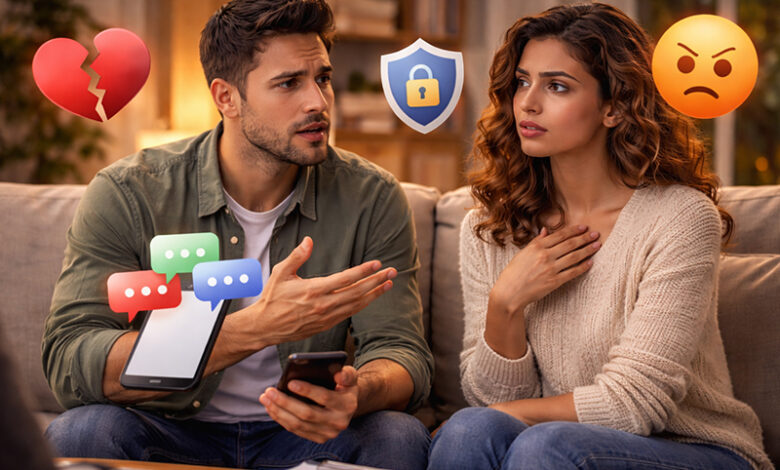
Social Media Boundaries Take Center Stage as Couples Reevaluate Trust and Privacy in Relationships
December 21: Social media boundaries have emerged as a central topic in relationship discussions, as couples increasingly reassess issues of trust, privacy, and emotional security in the digital age. Relationship counselors and mental health professionals report a growing number of couples seeking guidance on managing online behavior and its impact on personal relationships.
With social media platforms deeply embedded in daily life, online interactions are no longer viewed as separate from real-world relationships. Experts note that digital habits—ranging from public sharing to private messaging—are influencing emotional dynamics, often creating misunderstandings, insecurity, and conflict between partners.
The Changing Nature of Digital Interaction
Social media has transformed how individuals communicate, express emotions, and maintain connections. While these platforms offer opportunities for connection, they also introduce new challenges in romantic relationships.
Counselors explain that disagreements often arise over what is shared publicly, how much time is spent online, and interactions with others that may feel intrusive or ambiguous. Even seemingly minor actions, such as liking posts or delayed responses, can carry emotional weight.
As a result, couples are increasingly recognizing the need for clear digital boundaries.
Trust and Transparency in the Online Space
Trust remains at the heart of discussions surrounding social media use. Relationship experts observe that digital interactions can blur lines between openness and privacy, particularly when expectations are not clearly communicated.
Some partners expect complete transparency, including access to messages and accounts, while others value personal digital space. When these expectations clash, feelings of suspicion or control can emerge.
Experts stress that healthy relationships require mutual agreement rather than assumptions about online behavior. Establishing trust offline, they note, often reduces anxiety around digital interactions.
Privacy Concerns and Emotional Impact
Privacy has become a significant concern, especially when personal moments are shared online without mutual consent. Counselors report cases where partners feel exposed or disrespected by public posts involving private aspects of their relationship.
Such experiences can lead to emotional withdrawal or resentment. Experts emphasize that consent and communication are essential when sharing relationship-related content online.
Additionally, constant exposure to curated online images of other relationships can contribute to unrealistic expectations and comparison, affecting emotional well-being.
Time Management and Digital Distraction
Excessive screen time has also been identified as a growing issue. Couples frequently report feeling ignored or disconnected due to constant phone usage during shared moments.
Relationship professionals note that divided attention can erode emotional intimacy over time. Even brief but frequent interruptions can signal lack of presence, leading to dissatisfaction.
Experts recommend intentional device-free time to strengthen emotional connection and reinforce mutual respect.
Role of Counseling and Open Dialogue
Relationship counselors play a key role in helping couples navigate digital boundaries. Sessions often focus on understanding individual comfort levels, emotional triggers, and expectations related to social media.
Professionals guide couples in creating shared agreements rather than rigid rules. These agreements may include boundaries around posting, messaging, or screen-free routines.
Counselors emphasize that open dialogue, rather than surveillance or restriction, fosters trust and cooperation.
Influence of Social and Cultural Shifts
Cultural attitudes toward privacy and expression vary widely, influencing how individuals approach social media in relationships. Younger generations, in particular, often integrate digital identity closely with personal life.
Experts note that differing digital values between partners can lead to conflict if not addressed early. Open discussions about online habits are increasingly being encouraged during the early stages of relationships.
Public conversations around digital wellness have also contributed to greater awareness of social media’s emotional impact.
Balancing Individual Freedom and Relationship Respect
One of the key challenges highlighted by experts is balancing personal freedom with relationship respect. While individuals have the right to personal expression, partners also seek emotional security and mutual consideration.
Counselors advise couples to focus on intent rather than control. Understanding why certain behaviors cause discomfort can help partners respond with empathy rather than defensiveness.
Healthy boundaries, experts say, protect both individuality and partnership.
Impact on Relationship Satisfaction
Studies observed by counselors suggest that couples who openly discuss digital boundaries report higher relationship satisfaction. Clear expectations reduce misunderstandings and foster a sense of safety.
Experts stress that boundaries are not static and may evolve as relationships grow. Regular check-ins allow couples to adjust agreements based on changing needs and circumstances.
Such adaptability is viewed as a sign of emotional maturity and mutual respect.
Broader Implications for Modern Relationships
The growing focus on social media boundaries reflects a broader shift in relationship priorities. Emotional awareness, respect for privacy, and mindful communication are increasingly valued over performative expressions of connection.
Relationship professionals believe this shift indicates a move toward more intentional and emotionally grounded partnerships.
As digital spaces continue to shape social behavior, relationship norms are expected to evolve further.
Conclusion
Social media boundaries have become a defining issue in modern relationships, influencing trust, communication, and emotional well-being. As couples navigate the complexities of digital life, open dialogue and mutual understanding are proving essential.
By establishing respectful boundaries and prioritizing emotional presence over online validation, couples are redefining healthy relationship dynamics in the digital age. As awareness grows, experts emphasize that mindful digital behavior can strengthen, rather than strain, romantic partnerships.
